



What’s the Difference Between Retractable Flyscreens and Fixed Flyscreens?

If you are comparing flyscreens for your home, you will quickly come across two main options: fixed flyscreens and retractable flyscreens. Both keep insects out and let fresh air in, but they offer very different experiences in terms of appearance, flexibility, and long‑term value for Australian homes.
What Are Fixed Flyscreens?
Fixed flyscreens are the traditional screens most people are familiar with. They typically consist of an aluminium frame with mesh permanently fitted and installed over a window or door opening. They are a simple “fit and forget” option that provides constant insect protection.
Pros of fixed flyscreens
- Lower upfront cost compared with more advanced retractable systems.
- Simple, familiar design that suits basic windows which do not need frequent access.
- Can be a reasonable choice for small, rarely opened windows such as some bathroom or laundry awning windows.
Cons of fixed flyscreens
- Always visible, even when the window or door is not being used, which can interrupt views and reduce natural light.
- Often need to be removed for cleaning the glass, repainting frames, or accessing hardware such as winders and locks.
- Less suitable for large openings like bifold doors, stacker doors, and wide sliding doors, where frames can flex, bow, or look bulky.
- Can look heavy or dated on modern renovations or newly built homes with minimalist, architectural glazing.
Fixed flyscreens do the job of insect control, but they are permanently in place. That means you are always looking through a layer of mesh, even on days when insects are not a problem and you want a clear outlook.
What Are Retractable Flyscreens?
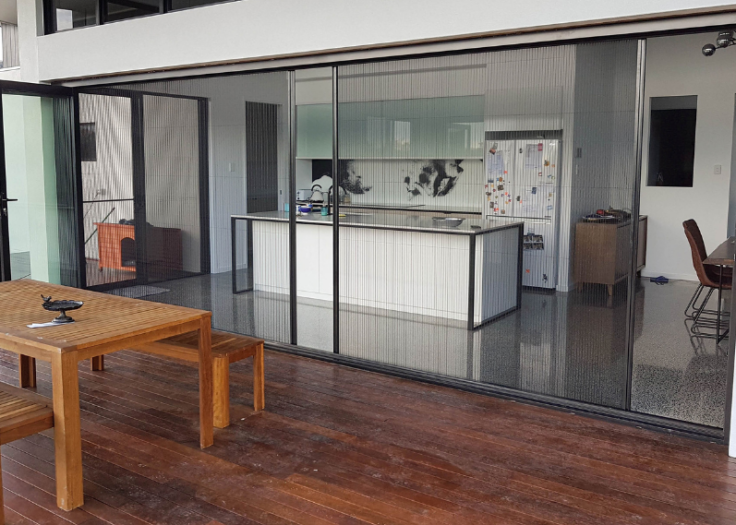
Retractable flyscreens are designed to disappear when you do not need them. Instead of being permanently fixed across the opening, the mesh glides out from a slim cassette or track system and retracts neatly away when you close it. This makes them ideal for homes that prioritise views, natural light, and indoor‑outdoor living.
Specialist providers like Ultrascreen focus on retractable fly screens for both doors and windows, engineered specifically to solve the limitations of traditional fixed screens on modern openings. Their range includes solutions for sliding, bifold, stacker, French, and patio doors, as well as various window styles.
Where retractable flyscreens work best
- Sliding doors, stacker doors, and large alfresco openings where you want wide, usable access.
- Bifold doors and French doors, where fixed screens are often impractical or unattractive.
- Servery windows and kitchen pass‑throughs that need clear benchtops and easy access to food and drinks.
- Outdoor areas such as verandas, balconies, and alfresco spaces where you want seasonal insect protection without permanent visual bulk.
- Windows where fixed flyscreens are not suitable or not desired
Pros of retractable flyscreens
- Retract completely when not in use, preserving uninterrupted views and maximising natural light.
- Suitable for a wide range of doors and windows, including large or awkward openings that are hard to screen with fixed options.
- Offer a more premium, streamlined finish that aligns with contemporary architectural design.
- Can be configured as pleated systems or sleek cassette‑style screens depending on your preferred look, space, and usage.
Cons of retractable flyscreens
- Higher upfront investment compared with basic fixed screens because of the more complex hardware and custom manufacturing.
- Many openings benefit from professional measurement and installation to ensure smooth operation and long‑term durability.
If you are exploring retractable screens Melbourne wide for a renovation or new build, you can look at Ultrascreen’s dedicated retractable insect screens to see how they are applied across different doors and windows.
Appearance: How Each Option Affects Your Home’s Look
Appearance is one of the biggest reasons homeowners upgrade from fixed screens to retractable systems, especially when they have invested in large glass areas or feature doors.
How fixed flyscreens look
Fixed screens are always there. Even when the door or window is closed, you will see the frame and mesh from inside and outside. This can:
- Interrupt views of gardens, pools, courtyards, or city skylines.
- Compete visually with slimline aluminium or timber door frames, making the façade look busier.
- Detract from feature doors or picture windows you have chosen as architectural statements.
If you have gone to the effort and expense of installing floor‑to‑ceiling glazing or wide openings, it can be disappointing to then cover them permanently with mesh.
How retractable flyscreens look
Retractable flyscreens are designed to be almost invisible when not in use. They:
- Sit neatly out of sight inside a slim cassette, headbox, or side track when open.
- Do not dominate the façade, allowing you to enjoy uninterrupted views when insects are not a concern.
- Can be colour‑matched to existing doors and windows so the system blends into the frame instead of drawing attention.
For many design‑focused homes, retractable fly screens are now considered part of the glazing solution. They respect the architecture and only appear when you need insect protection.
To see how retractable systems integrate into modern homes, you can explore the main retractable fly screens page, which showcases how these screens sit alongside contemporary doors and windows.
Everyday Use: Which Is More Practical?
Australian homes are built for airflow, entertaining, and easy access to outdoor spaces. Day‑to‑day practicality is where retractable flyscreens really stand out.
Living with fixed flyscreens
- On doors, fixed screens can feel restrictive when you are carrying trays, drinks, or furniture through high‑traffic areas.
- Removing fixed screens for cleaning is awkward and time‑consuming, so many people delay maintenance.
- In busy family homes, fixed screens can become bent or torn from kids and pets pushing against them.
In reality, most people leave fixed screens in place permanently, even when they would prefer a clear opening, simply because removing and refitting them is inconvenient.
Living with retractable flyscreens
- You slide or pull the screen across only when you need insect protection and retract it when you need full, open access.
- The smooth gliding mechanism makes them easy to use for children, guests, and older family members.
- They are ideal for entertaining because you can keep the doors wide open, maintain airflow, and still keep insects out in the evenings.
If you are specifically looking at a retractable screen door Melbourne homeowners can use on sliders and bifolds, Ultrascreen’s retractable screens for sliding doors is a useful starting point for understanding how the system works across different door types.
Airflow, Ventilation and Comfort
Both fixed and retractable flyscreens allow air to pass through, but retractable systems give you more control over when and how you open up your home.
What both options offer
- Natural airflow through open doors and windows while still providing a barrier against flies, mozzies, and other insects.
- A more comfortable indoor environment during warmer months without needing to keep doors shut all day.
Extra flexibility with retractable flyscreens
- You can fully open doors and windows with no mesh visible during cooler parts of the day or seasons when insects are less active.
- In the evenings or during peak mosquito times, you simply pull the screen across to enjoy the breeze without bites.
- It becomes easier to make the most of cross‑ventilation because you are not reluctant to open wide doorways that would otherwise be permanently screened.
By using retractable systems thoughtfully, homeowners can support natural cooling strategies and reduce their reliance on air conditioning, especially in living areas that open to decks or patios.
Cost vs Long‑Term Value
Fixed flyscreens are usually cheaper at the time of installation, but cost is only one part of the story. Long‑term value also comes from durability, usability, and the impact on how your home feels.
Upfront cost
- Fixed screens use simple frames and mesh, which makes them more affordable to produce and install.
- Retractable flyscreens include more sophisticated mechanisms, cassettes, and custom‑made components tailored to each opening, so they sit at a higher price point.
Long‑term value of retractable flyscreens
- Professionally installed retractable systems are designed for frequent use and can offer excellent durability over many years.
- Because the mesh is protected inside a cassette when retracted, it is less exposed to UV damage, weather, and accidental impacts.
- Well‑integrated retractable fly screens on large doors and alfresco areas can enhance perceived value and appeal to future buyers who expect modern indoor‑outdoor living.
Many homeowners begin with fixed screens for budget reasons and later upgrade to retractable options once they have lived with the limitations of permanent mesh on larger openings. In many cases, they find the extra investment pays off in daily comfort and aesthetics.
If you are interested in tailored advice and custom solutions, Ultrascreen offers fully bespoke systems through their custom retractable fly screens Melbourne service, which can help you choose the right configuration for your space.
When Fixed Flyscreens Still Make Sense
Although retractable flyscreens suit many modern homes, there are still situations where fixed screens remain a practical choice.
- Small secondary windows that are opened occasionally, such as some toilets or laundries, where views and high‑end aesthetics are less important.
- Projects with tight budgets where you need basic insect protection quickly across a large number of standard windows.
- Investment properties where simple, robust, and cost‑effective solutions are preferred.
In these cases, a combination of both styles can work well: fixed screens on minor openings and retractable fly screens on key doors and living areas, so you protect your main lifestyle spaces while keeping costs under control.
Choosing the Right Screen for Your Home
The real difference between retractable and fixed flyscreens is not just how they look, but how you live with them throughout the year. Fixed flyscreens do one job all the time. Retractable flyscreens adapt to you: when you need them, they are there, and when you do not, they retract out of the way.
You might lean towards retractable screens Melbourne homeowners increasingly choose if you:
- Entertain often and want wide, usable openings to decks, patios, courtyards, or balconies.
- Have invested in large glass doors or picture windows and do not want to compromise your outlook.
- Prefer a clean, modern aesthetic with minimal visible frames and hardware.
You may still consider fixed flyscreens if you:
- Are primarily screening smaller, secondary windows on a tight budget.
- Do not have many large door openings or outdoor entertaining areas.
For many Australian homes, particularly those embracing indoor‑outdoor living, retractable flyscreens are the smarter long‑term choice. If you are ready to explore options for retractable fly screens Melbourne wide, including doors, windows, and outdoor areas, you can learn more about Ultrascreen’s full range of retractable fly screens and retractable insect screens before arranging a measure and quote.